Places we’ve actually been, with kids who have sensory needs
Looking for sensory-friendly destinations in the Midwest that a neurodivergent family has actually visited? This is that guide — real places, real kids, real experiences across Wisconsin, Illinois, and Indiana.
I’m going to be honest with you about something.
Most sensory-friendly destination guides are written by people who googled “autism friendly museums” and made a list. This isn’t that.
Our family has ADHD, autism, and everything that comes with navigating a world that wasn’t built for our brains. We’ve been to every place on this list — with our kids, ranging from toddlers to teenagers, on good days and hard days, and the days that became stories we still tell.
I don’t typically rely on a venue’s sensory supports when we arrive. After years of doing this, I prepare as if nothing will be available — headphones packed, snacks ready, social stories done, quiet plan in place — because the best support is the one you brought with you. What I can tell you is which places made our family feel welcome, which ones surprised us, and which ones we keep going back to.
This is that list.
If you’re just starting to figure out how to travel with a neurodivergent family, our post on how we learned to adventure together covers everything we wish we’d known earlier.
A NOTE BEFORE WE START
Water is naturally calming for our kids. I say this because it shapes everything on this list. Aquariums, rivers, waterfalls, lakes — if you have a sensory sensitive child who hasn’t discovered water yet, that discovery might change everything about how your family adventures. Only one of our neurodivergents has an aversion to water, and he chooses not to get wet, which we honor as a family.
It changed ours.
WISCONSIN
Madison Children’s Museum — Madison, WI
A great starting point for families new to sensory-friendly museum visits. The museum offers dedicated sensory-friendly hours in partnership with the Autism Society of South Central Wisconsin — free admission, comfort rooms designated throughout the building, fidgets, timers, and headphones available at the front desk. The rooftop garden with real chickens is genuinely magical for kids who need to move, touch, and explore. The scale of the museum feels manageable rather than overwhelming, which matters more than any official accommodation.
Good for: First museum trips, younger kids, families who want a low-stakes sensory-friendly experience close to home.
Milwaukee Public Museum — Milwaukee, WI
One of our favorites. The Streets of Old Milwaukee exhibit alone is worth the trip — it’s immersive in a way that feels like stepping into a story rather than being lectured at. The museum has a sensory room, tactile kits, and an adult changing space, but what we love most is the pacing. You can move through it slowly, linger in the spaces that work, and leave the ones that don’t without feeling like you’ve missed anything.
Good for: All ages, history-loving kids, families who want a full day in Milwaukee.
Milwaukee County Zoo — Milwaukee, WI
KultureCity certified sensory inclusive — sensory bags with headphones, fidgets, and weighted lap pads available at guest services. The zoo’s layout means you can self-pace completely, take detours, skip the louder sections, and find quiet corners near the less popular exhibits. The train ride is a reliable hit for kids who need predictable movement and a clear beginning and end.
Pro tip: Wisconsin residents can check out free passes to the Milwaukee County Zoo through participating Wisconsin libraries — you don’t necessarily have to live in that town, just be a Wisconsin resident. Check your local library system.
Brookfield Zoo — Brookfield, IL
Sensory room on site, accessibility guide, quiet spaces throughout the park. Similar to the Milwaukee County Zoo in terms of self-paced outdoor exploration but larger, with more variety. The library pass tip above applies here too — this is one of the most accessible free days your family can have.
Good for: Full-day adventure, older kids, and teens who want more to explore.
ILLINOIS — CHICAGO
Chicago deserves its own section because a Chicago day trip with a neurodivergent family requires real planning — the city itself is high stimulation before you walk into a single building. Build in transition time, have a clear plan for the day, pack everything, and pick one or two destinations maximum. Chicago rewards preparation.
Shedd Aquarium — Chicago, IL
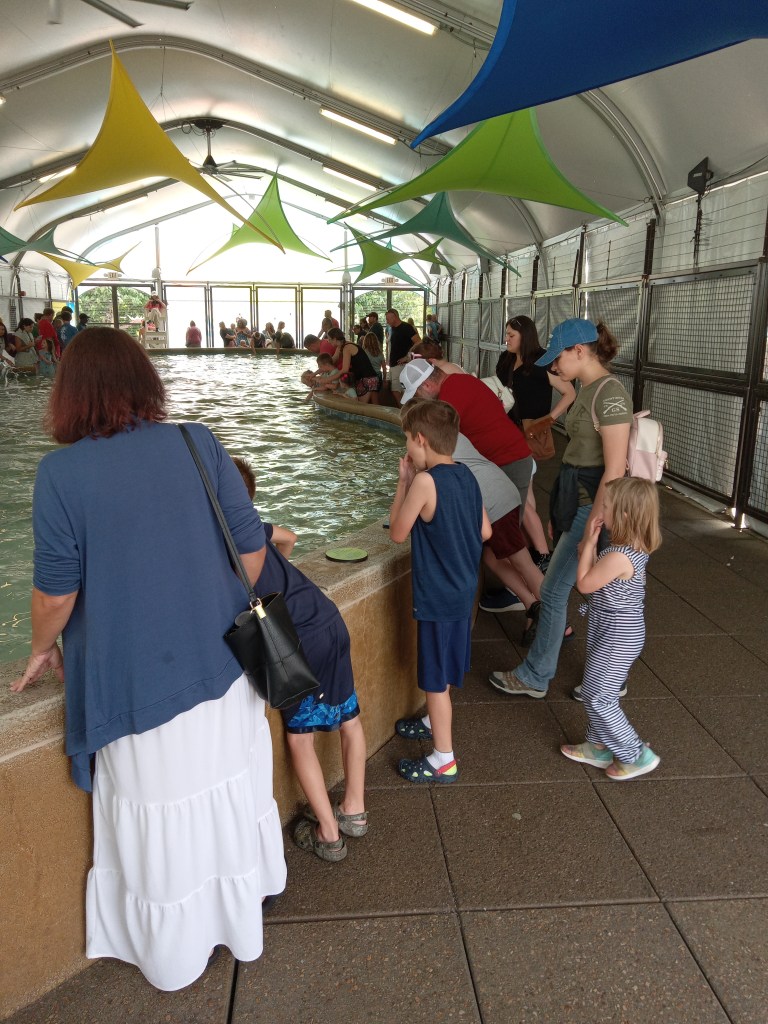
The gold standard. KultureCity certified, free sensory bags at the entrance with headphones, fidgets, and weighted lap pads, a Quiet Room available any day, social stories and visual schedules on their free app, and Calm Waters events several times yearly for limited capacity low-sensory visits.
We go during regular hours. The Calm Waters events are wonderful, but they fill quickly and don’t always fall when we can make it. During regular hours, the sensory bags and Quiet Room carry us through.
And then there are the stingrays.
We spent two hours at the stingray touch tank on our last visit. Two hours. Every single kid — soaked, laughing, completely present, completely calm. Nobody was overwhelmed. Nobody needed a break. Water does something for our family that nothing else does, and standing at that tank watching our kids light up was one of those parenting moments you file away forever.
Don’t miss: The stingray touch tank. Budget unlimited time. Good to know: Calm Waters events are limited in capacity and require advance registration. Worth checking the schedule before your visit, even if regular hours work fine.
Field Museum — Chicago, IL
Free “Field for All” app with customizable visit schedules, sensory maps showing louder versus quieter areas, and exhibition previews so your kids know what to expect before they walk in. Sensory bags available. Select Saturday mornings offer a sensory-friendly hour at the Crown Family PlayLab.
Honest take: the aquarium goes better for our family because of the water. The Field Museum is magnificent, but it’s a bigger, louder, more overwhelming space. We go with a clear plan — two or three exhibits maximum, app downloaded ahead of time, snacks in the bag. When we approach it that way, it’s incredible.
Pro tip: Download the Field for All app before you leave home and let your kids preview the exhibits they want to see. Managing expectations before arrival changes everything.
Art Institute of Chicago — Chicago, IL
Sensory-friendly maps available, designated reduced-stimulation areas, spaces for tactile interaction. For older kids and teens who connect with art, this is a genuinely beautiful experience. For younger or more active kids, it requires more preparation. We recommend going on a weekday morning if possible — the difference in crowd levels is significant. My husband and I also get less time at the art museums than we would like, as they require more quiet and self-control than most of the venues on the list.
INDIANA
Children’s Museum of Indianapolis — Indianapolis, IN
The largest children’s museum in the world and one of the best weekend trips we have ever taken as a family.
Here’s why: it’s built for every kind of kid. The scale is enormous,s but the exhibits are designed so that you can find your family’s pace within them. Sensory accommodations throughout. Multiple floors of genuinely different experiences so that the child who needs to move can move, the child who needs to sit and focus can sit and focus, and the child who needs to leave a space has somewhere else to go immediately. The spiral ramp in the center of the museum was entertainment in itself for the littles.
It’s also surprisingly affordable for what it is — make it a weekend trip, stay nearby, and give yourself two full days. One day is not enough.
This destination deserves its own full article and will get one. For now, put it on your list if it isn’t already. It’s worth the drive from anywhere in the Midwest.
Good for: All ages, all needs, full weekend adventure. One of the best family trips we’ve taken.
NATURE — WHERE OUR FAMILY CONNECTS BEST
Here’s our honest truth: the places that work best for our neurodivergent family are outside. Nature is the original sensory-friendly environment — the stimulation is predictable, the pace is yours, there’s always somewhere quieter to go, and nobody is watching the clock.
These are our outdoor anchors. Camping or day trips.
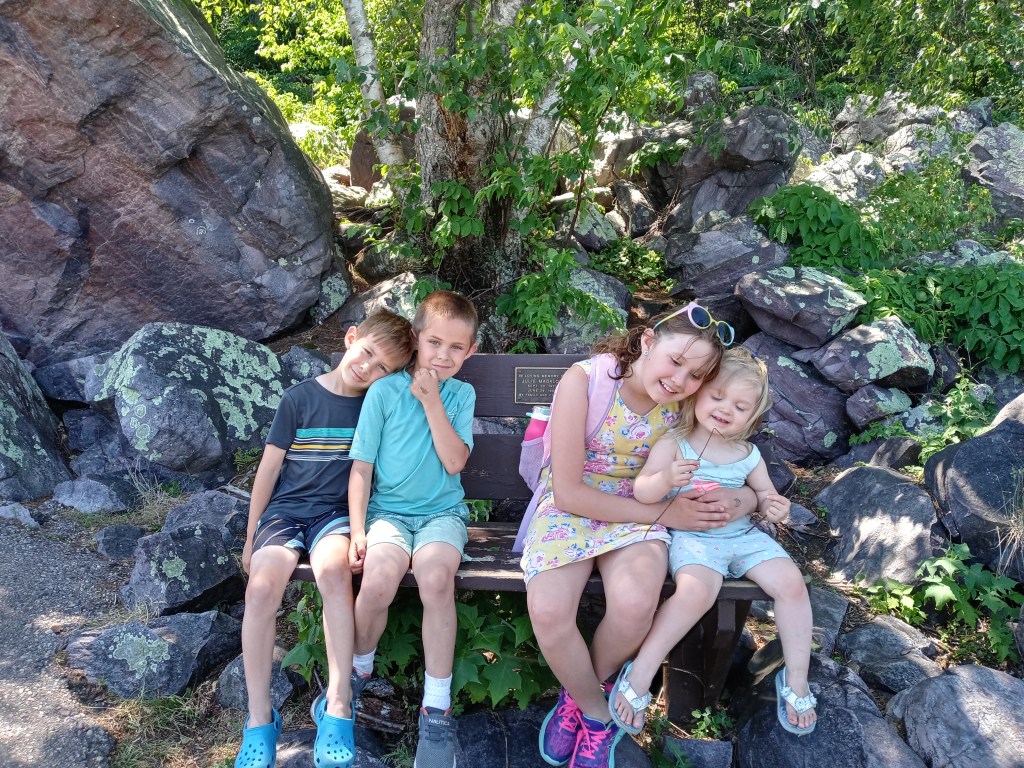
Devil’s Lake State Park — Baraboo, WI
Almost no cell service. That’s not a warning. That’s the whole point.
The quartzite bluffs, the glacial lake, and trails for every ability level. We’ve hiked here as a couple and with the whole crew. The self-paced nature of a state park means nobody is rushed, nobody has to keep up, and the kid who needs to sit on a rock for twenty minutes and watch the water can do exactly that.
Read our full guide: Wisconsin Waterfall Hikes for Families
Copper Falls State Park — Mellen, WI
Low crowds, predictable trails, and waterfalls that made everyone stop and go quiet. The river here is where our kids caught crawdads for forty-five minutes, and we didn’t hear a single complaint from anyone. Bring water shoes.
Read our full guide: Wisconsin Waterfall Hikes for Families (link)
Pattison State Park — Superior, WI
Home to Big Manitou Falls, the tallest waterfall in Wisconsin, at 165 feet. Accessible viewing points mean everyone in your family can experience it regardless of mobility. The falls themselves do something to people. Even our most energetic kids just stood there and looked.
Read our full guide: Wisconsin Waterfall Hikes for Families (link)
Starved Rock State Park — Utica, IL
Ninety minutes from Madison. Eighteen canyons, waterfalls, and trails range from easy to challenging. A beautiful hike with the kids — the canyon walls make the world feel contained and manageable in a way that wide open spaces sometimes don’t. Good for families who want the outdoor experience with natural boundaries.
Good to know: Can get crowded on summer weekends. Weekday visits or early morning arrivals are significantly calmer.
Porcupine Mountains Wilderness State Park — Ontonagon, MI
We did this as a day trip from Eagle River when our youngest was four or five years old. I want to be honest with you: it was hotter than we expected. Bring more water than you think you need. There’s no cell service.
I also want to tell you it was a wonderful day and a hike our family still talks about. The scale of the Porcupine Mountains — old growth forest, Lake of the Clouds, the sheer wildness of it — is humbling in the best way. The littles made it. Everyone made it. Pack the water, leave the expectations at home, and go.
Good for: Families who want a real wilderness experience. Day trip from Eagle River or the Ironwood area.
THE LIBRARY PASS SECRET
Wisconsin residents can check out free or discounted passes to some of the best attractions in the state through participating public libraries. You don’t have to live in that specific town — Wisconsin residency is the only requirement in some towns, including Oconomowoc.
Attractions available through Wisconsin library systems include the Milwaukee County Zoo, the Brookfield Zoo, and others, depending on your library. Check with your local library’s website or call and ask — this is one of the most underused resources for Wisconsin families, and it can make a Chicago or Milwaukee trip significantly more affordable.
WHAT WE’VE LEARNED
Every family is different. Every neurodivergent brain is different. What works for our family might need adjusting for yours, and that’s exactly as it should be.
But here’s what holds true everywhere on this list: the places that gave us the best days were the ones where we arrived prepared, kept our expectations flexible, built in quiet time, and followed our kids’ lead when they found the thing that lit them up.
Two hours at a stingray tank. A four-year-old on a Porcupine Mountains trail. Five kids catching crawdads in a river.
You can’t plan those moments. You just have to show up and leave room for them.
That’s the adventure. All of it.
Museums for All — The Program Every Family Should Know About
If your family receives SNAP benefits, this changes everything about museum trips.
Museums for All is a national program that provides free to $5 admission for up to four people per EBT card at more than 1,600 participating museums, zoos, aquariums, botanical gardens, and science centers across the United States. You simply show your EBT card and a photo ID at the door during normal operating hours. No special events, no advance registration, no separate application. Just show up.
Several of the destinations on this list participate, including the Children’s Museum of Indianapolis, which is one of the reasons a weekend trip there is so accessible for families. Before any museum visit, search your destination at museumsforall.org to see if they participate.
For neurodivergent families, especially where one hard day can mean cutting a trip short, where you sometimes need to leave early or skip sections entirely, knowing admission was $3 instead of $30 removes a layer of pressure that makes the whole experience easier.
Adventure should be available to every family. This program helps make that true.
Search participating museums at museumsforall.org
Your Connection Moment
Before your next trip, ask each person in your family — kids included: “What’s one thing you’re most excited about and one thing you’re most worried about?”
Honor both answers. Plan for both answers.
Then go.
Quick Facts: Sensory Friendly Midwest Travel
- Best starting point: Madison Children’s Museum, WI — free sensory hours, manageable scale, close to home for most Wisconsin families
- Best aquarium: Shedd Aquarium, Chicago — KultureCity certified, free sensory bags, Quiet Room daily, Calm Waters events
- Best natural destination: Devil’s Lake State Park, Baraboo, WI — minimal cell service, self-paced, multiple trail difficulties
- Best weekend trip: Children’s Museum of Indianapolis — affordable, Museums for All eligible, two full days recommended
- Money-saving tools: Museums for All (museumsforall.org) — free to $5 admission with EBT card at 1,600+ locations; Wisconsin Library passes for Milwaukee County Zoo and Brookfield Zoo
- Universal packing rule: Bring your own headphones, snacks, comfort items, and fidgets — don’t rely on venue supports being available
- Water tip: Aquariums, rivers, and waterfalls are naturally calming for many sensory-sensitive kids — plan accordingly
- Chicago tip: Pick one or two destinations maximum — the city itself is high stimulation before you enter a single building
 Adventure With John and Jess
Leave a comment